
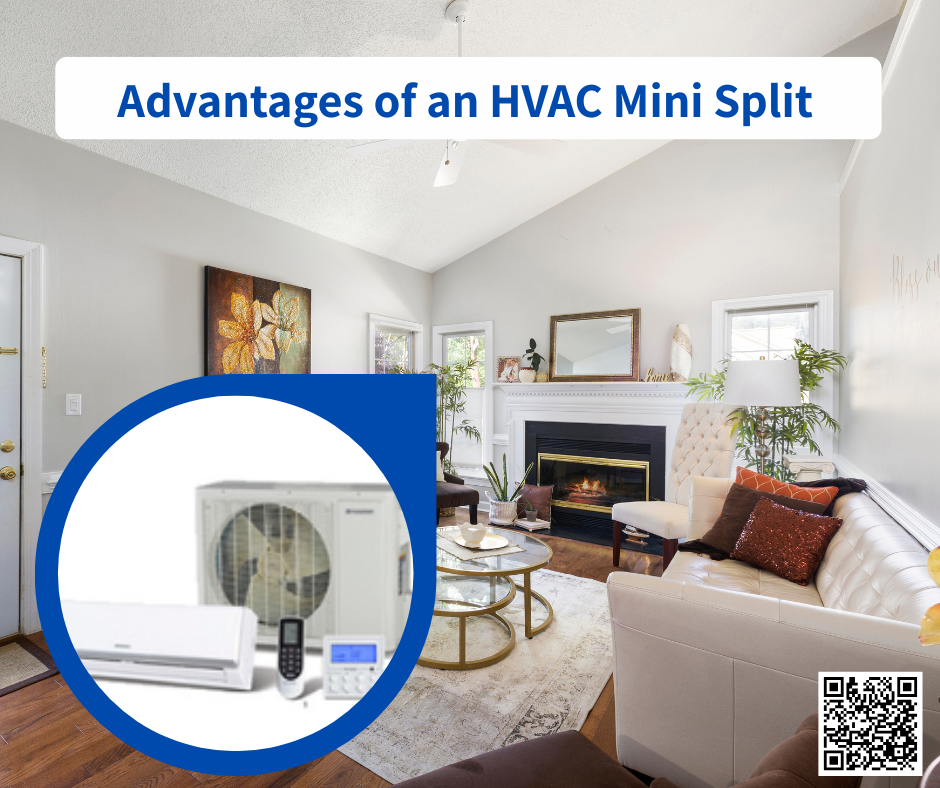

Why Choose a Mini‑Split HVAC System?
Mini‑split HVAC systems have exploded in popularity because they solve problems that traditional ducted systems simply cannot. They offer flexibility, high efficiency, and personalized comfort, making them a strong option for both new installations and upgrades.

No Ductwork Needed
Mini‑split systems deliver heating and cooling without duct work, making them ideal for:
- Older homes without existing ductwork
- Additions, garages, sunrooms, basements
- Spaces where running ducts is expensive or impractical
High Energy Efficiency
Mini‑split systems use higher, more energy efficient inverter‑driven compressors that modulate output instead of cycling on/off. Mini‑split inverter technology allows the compressor to vary its speed instead of cycling on/off, which dramatically improves efficiency, comfort, and noise levels. It’s the core reason modern ductless systems outperform older fixed‑speed HVAC units. This leads to:
- Higher efficiency, Lower energy bills
- Less wear on components
- More consistent temperatures
Room‑by‑Room Temperature Control
Each indoor mini split head has its own thermostat, giving you:
- Personalized comfort
- The ability to heat/cool only the spaces you use
- Better, simpler zoning than traditional systems
Quick, Flexible Installation
Due to Mini Split systems only requiring a small refrigerant line, installation is:
- Faster
- Less invasive
- More adaptable to unique layouts
Quiet Operation
Mini‑split systems are known for whisper‑quiet indoor units, creating a more peaceful environment.
Lower Long‑Term Costs
While upfront cost can be higher, many homeowners save money over time due to:
- Reduced energy consumption
- Fewer duct‑related losses
- Lower maintenance needs
Main Types of Mini‑Split Systems
Single‑Zone Mini‑Split
- One outdoor unit + one indoor unit
- Ideal for one room, additions, garages, sunrooms
- Simple installation and lower cost
Multi‑Zone Mini‑Split
- One outdoor unit + multiple indoor units
- Heats/cools several rooms independently
- Great for whole‑home zoning
Ductless Mini‑Split
- No ductwork required
- Most common type
- Highest efficiency due to zero duct losses
Ducted Mini‑Split
- Uses short duct runs (often concealed in ceilings)
- Cleaner aesthetic—no wall units visible
- Good for multiple small rooms
Types of Mini‑Split Indoor Units
These indoor mini split units determine how the conditioned air enters the room, but are built for various applications.
Wall‑Mounted Units
- Most common and affordable
- Easy installation
- Reliable and efficient
Ceiling Cassette Units
- Mounted flush in the ceiling
- Excellent air distribution
- Great for open spaces or when you want a cleaner look
Ceiling Ducted (Concealed) Units
- Hidden above the ceiling
- Uses short ducts to feed multiple vents
- Best for homeowners who want no visible equipment
Floor‑Mounted Units
- Installed low on the wall like a radiator
- Good for rooms with limited wall space
Ceiling‑Suspended Units
- Hang from the ceiling
- Strong airflow and higher capacity
- Ideal for large rooms or commercial spaces

Inverter Technology Advantages
Inverter Technology Link
Mini‑split inverter technology delivers higher efficiency, steadier comfort, and quieter operation by letting the compressor adjust its speed instead of cycling on and off. This variable‑speed behavior is the core advantage that sets inverter systems apart from older fixed‑speed HVAC units.
How inverter technology works
Inverter mini‑splits use electronics to let the compressor modulate output in real time based on the room’s temperature demand. Instead of blasting at full power and shutting off, the system ramps up or down smoothly to maintain the set temperature. This eliminates the wasteful stop‑start cycle found in traditional systems.
Key advantages
Major energy savings — Inverter systems typically use 30–40% less energy than older fixed‑speed units because they only produce the exact amount of heating or cooling needed.
More consistent comfort — The compressor adjusts speed continuously, keeping temperatures stable without swings. This also improves humidity control.
Much quieter operation — Because the system often runs at low speed, both indoor and outdoor units operate with significantly reduced noise.
Longer equipment life — Fewer hard starts reduce wear on the compressor and other components.
Better zoning — Mini‑splits already offer room‑by‑room control, and inverter modulation enhances efficiency in each zone.
Ideal for homes without ductwork — The ductless design paired with inverter efficiency makes these systems excellent for retrofits, additions, and older homes.
Conclusion
Mini splits have a lot to offer homeowners in terms of flexibility in application, zone control and efficiency.
Air Doctor Heating and Air offers Free Estimates along with 10 year Parts AND 10 year Labor Warranty- Peace of mind for you and your family for a decade to come! Contact Us, Call or Text Us at 301-799-7200